Week 1 / Day 5
Day 5 of 5, 18 min
The one rule everything hangs off
Let go of the thing you cannot control, and pour everything into the thing you can. Plus the Week 1 checkpoint.
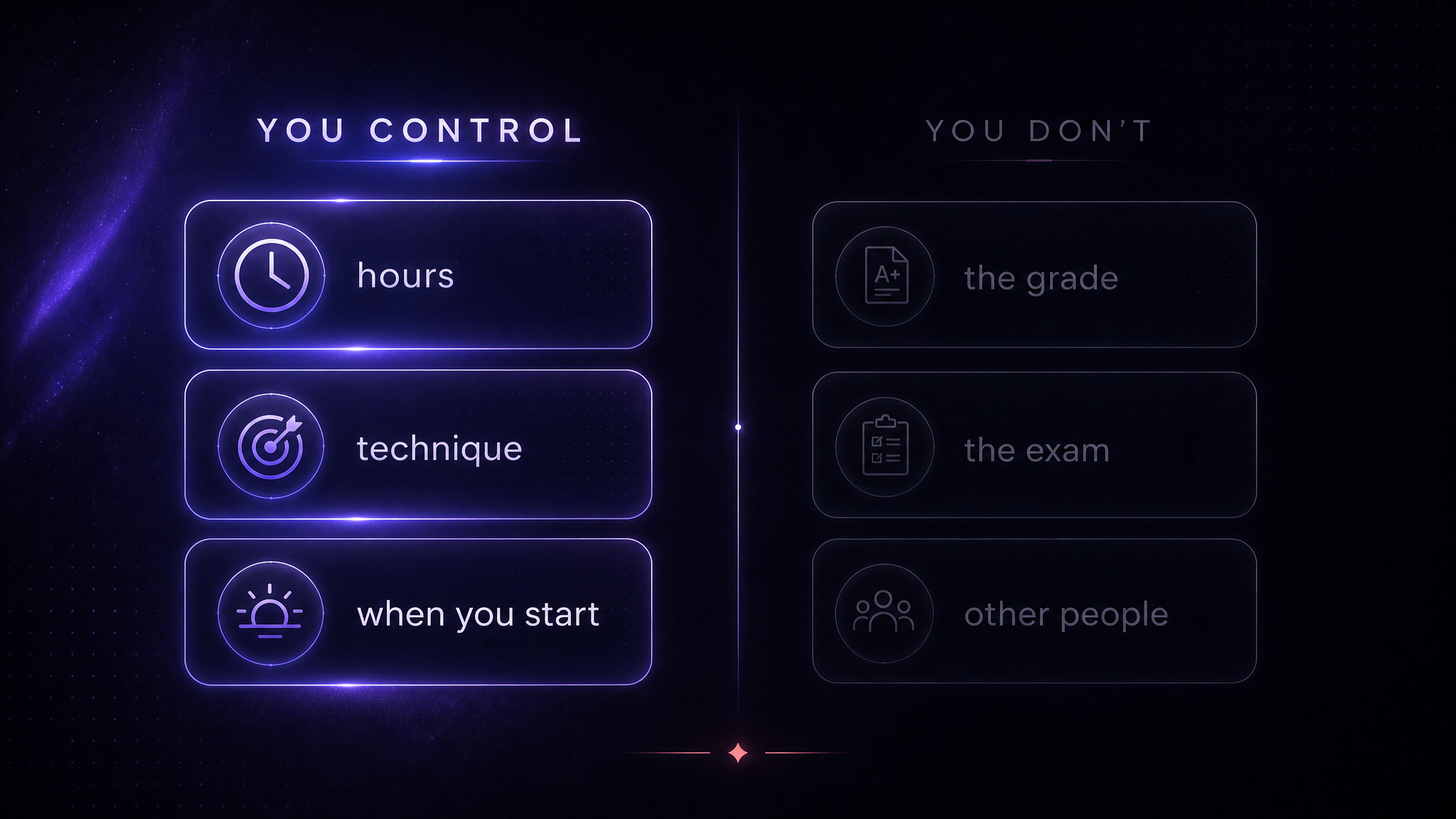
Here is something that sounds harsh and is actually freeing: you cannot control your grade. You cannot control whether the exam is fair, how hard the questions are, or how everyone else does. Chasing the outcome directly just makes you anxious about the one thing you cannot touch.
But there is a lot you can control. And the whole game is to move your attention onto that, ruthlessly.
Ruthlessly focus on your locus of control
Your locus of control is the set of things you can actually change. The grade is an outcome, a symptom. The process that leads to it, when you start, which technique you use, how you set up your environment, is yours. Justin's golden rule is to let go of the outcome and pour everything into the process. Sort a few of these to feel the line.
I can control this
I cannot
Tap each one: once for "I can control this", again for "I cannot", again to reset.
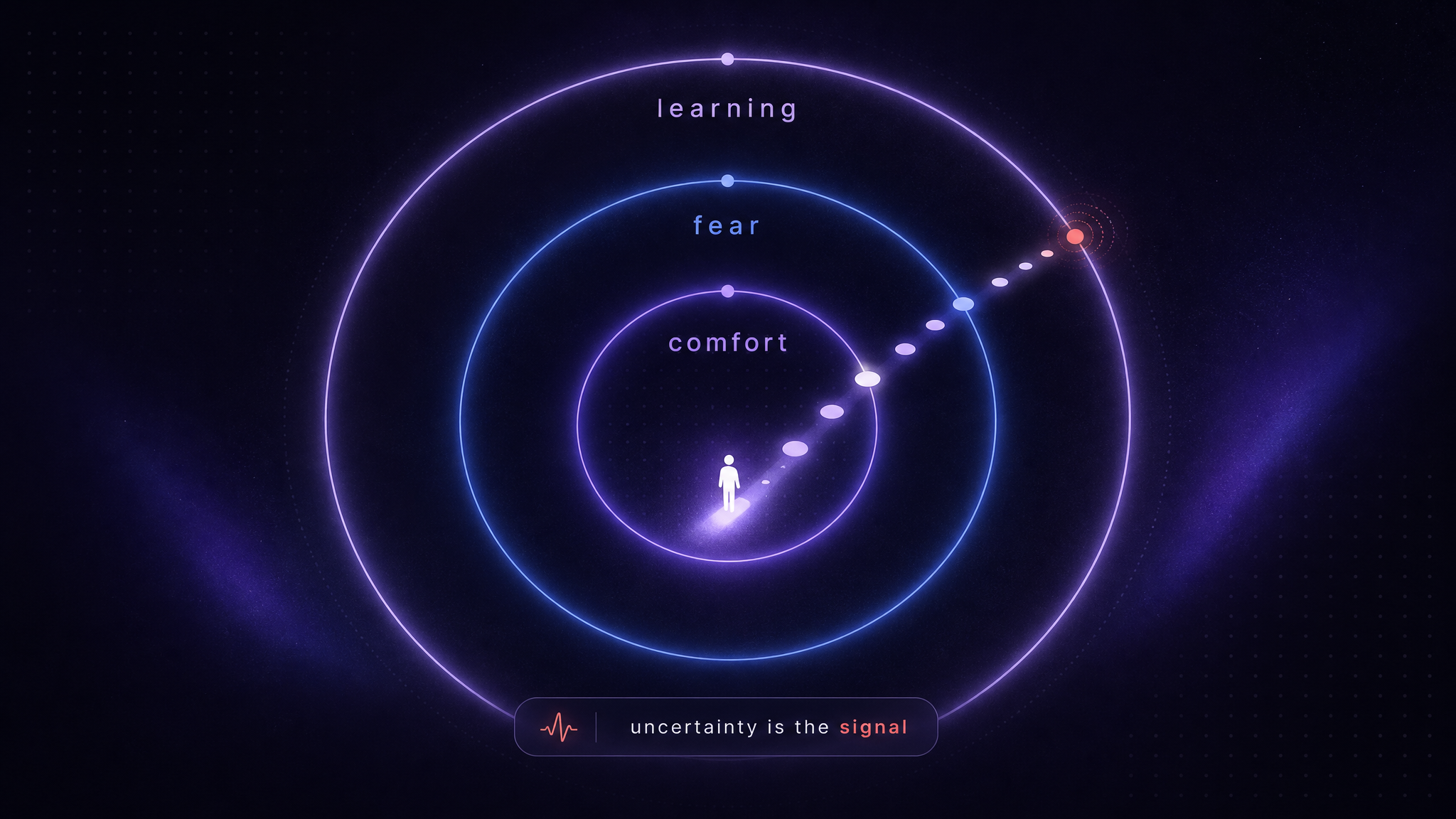
There is a matching idea for the discomfort itself. Learning always creates a little uncertainty, and that uncertainty is not a signal to retreat. It is the sign you have stepped out of your comfort zone and into the zone where learning actually happens.
Watch someone do it
A student bombs a midterm. The old version of her spirals: I am just not a maths person. The version who gets this stops and separates it out. The result was bad, fine, that is an event. What was the process? She started three days before, studied by rereading, never tested herself. Now there are three concrete things to change. Same failure, but one path ends in a story about herself and the other ends in a plan.
One outcome, three processes
Write down one outcome you are chasing, a grade, a goal. Then, underneath, write three things fully in your control that lead to it. Tomorrow, ignore the outcome entirely and just do one of the three.
Ask your own coach
Paste your work into ChatGPT with this. It plays the coach we designed, and pushes on your thinking instead of handing you the answer.
You are my learning coach, trained on the iCanStudy method by Justin Sung. My goal is [outcome]. The three things I think I control that lead to it are [paste]. Tell me whether those are genuinely in my control or still outcomes in disguise, and suggest one more process lever I might be missing. Keep it under 120 words, specific, and encouraging.
Week 1 checkpoint
This is the big one. If you can answer these in your own words, without notes, Week 1 is genuinely in you:
Next week you stop understanding learning and start doing it: getting things into your head properly, with maps you build yourself.