Week 1 / Day 1
Day 1 of 5, 15 min
You were never taught how to learn
Not really. You were taught what to learn, thousands of times. How to actually put it into your head and keep it there, almost never. That is what we start fixing today.
You read the chapter twice. It made complete sense while you were reading. Two days later you sit down for the test, and it is just gone. You have been there. Almost everyone has.
Here is the important part: that is not a sign you are bad at the subject, or not smart enough. It is a specific, fixable thing, and almost no one is ever told what it is.

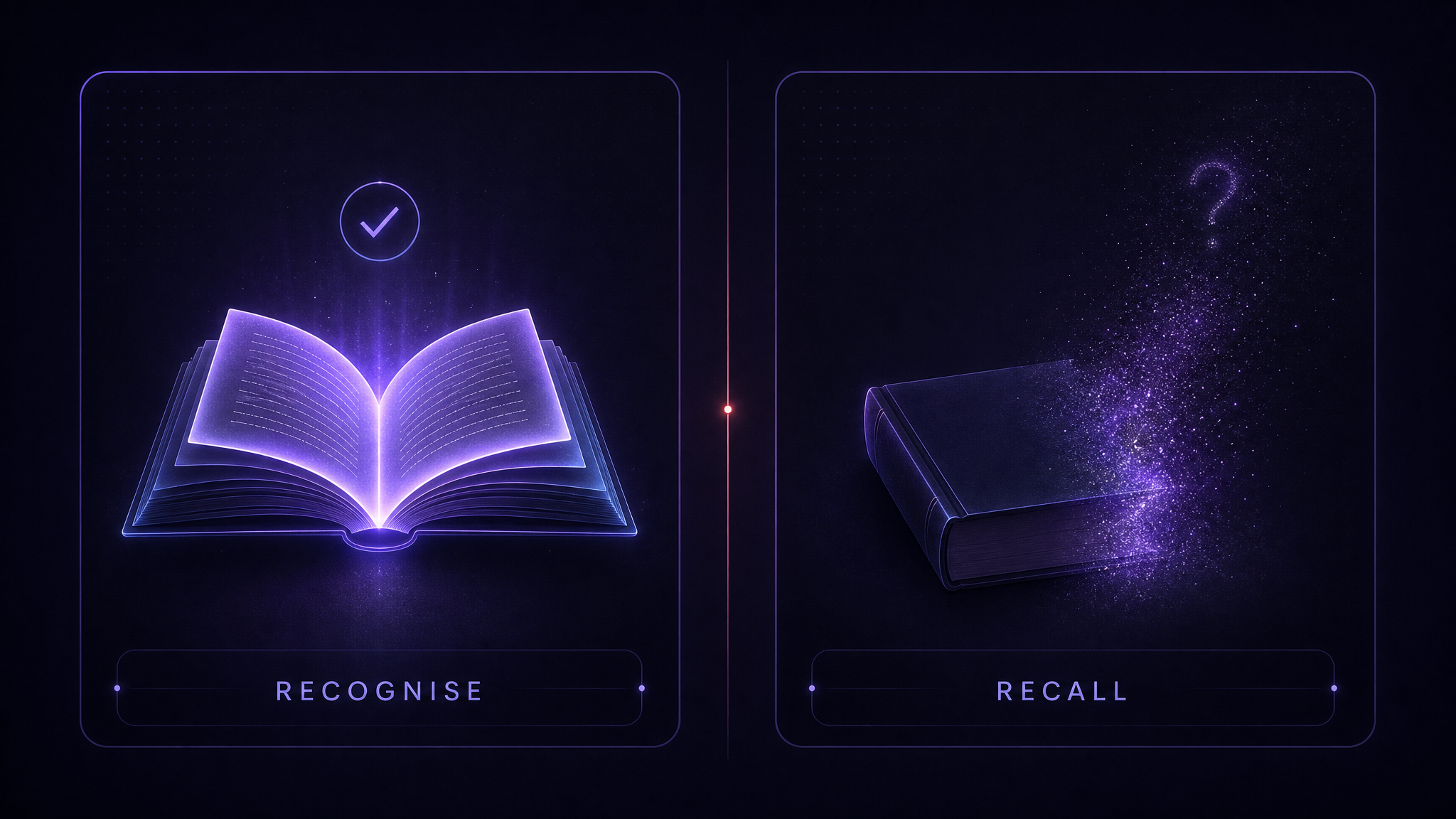
Understanding is not the same as remembering
When something makes sense as you read it, that feeling is real, but it is not learning. Recognising an answer when you see it is easy. Producing it from memory, with the book closed, is the hard part, and that is the part a test, or real life, actually asks of you. Let me show you the gap directly.
Two students, same chapter
Two people read the same chapter. The first rereads it three times, feels ready, and moves on. The second reads it once, then shuts the book and tries to explain it out loud from memory. The second one stumbles, feels worse, goes back to check, and fixes the gaps. A week later, the one who felt worse is the one who remembers it. The stumbling was the learning.
Two minutes, book closed
Pick one thing you studied this week that you feel you already know. Close everything. On a piece of paper or a note, write down everything you can about it from memory, for two minutes, no peeking.
Ask your own coach
Paste what you wrote into ChatGPT with this. It will play the coach we designed, and push on your thinking instead of just handing you answers.
You are my learning coach, trained on the iCanStudy method by Justin Sung. I just tried to write everything I know about [topic] from memory. Here is what I wrote: [paste]. Do not simply add the missing facts. Instead, point out the two biggest gaps or fuzzy spots, ask me one question that would expose whether I really understand it, and tell me one thing I clearly do know well. Keep it under 120 words and encouraging.