Week 3 / Day 1
Day 1 of 5, 16 min
Hunt the gap, do not hide from it
Testing yourself is not a performance. It is a search, and what you are searching for is the thing you cannot do yet.
Here is what revision usually looks like. You open the topic you already know best, you go over it again, it all feels familiar, and you close the book feeling prepared. It is the most common study habit there is, and it is close to useless.
You picked that topic precisely because it felt good. The topics that felt bad are the ones with the gaps, and the gaps are the only thing that decides your result.
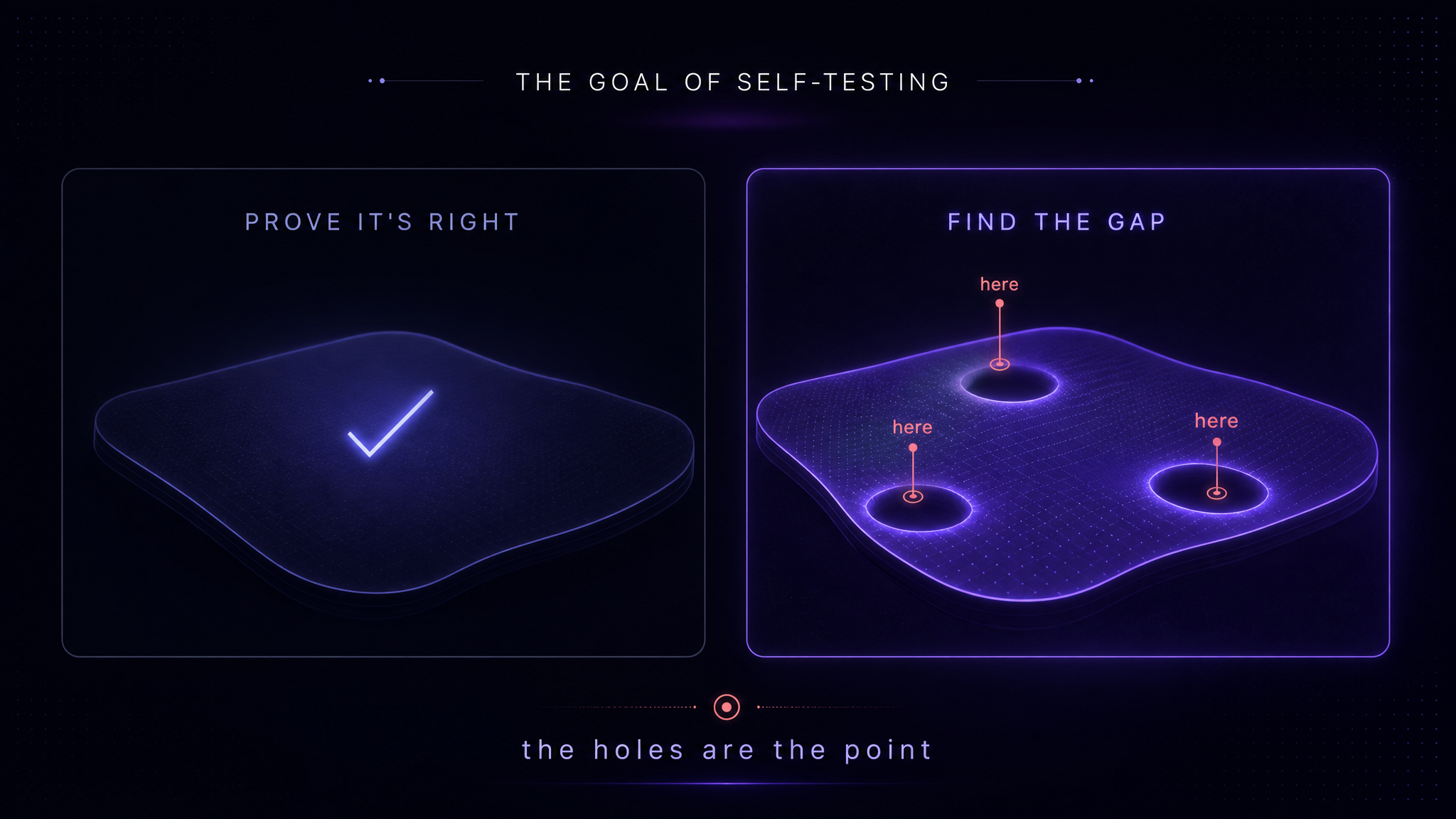
The point is not to get it right
Retrieval means any moment you pull knowledge out of your own head: answering a question, explaining something to a friend, solving a problem without the notes open. It does two jobs at once. It strengthens what you already have, and it shows you what you do not have.
The second job is the valuable one, and it is the one almost everyone avoids, because finding a gap feels like failing. In this method it is the opposite. A question you got right tells you almost nothing. A question that exposed a hole just did its entire job.
Watch someone do it
A student has an exam in two weeks. Instead of reviewing her strongest module again, she opens the one she has been quietly avoiding and tries three questions with the notes closed. She gets one and a half of them. She writes down the two specific things that broke, and those two things become the week's work. It felt worse than her usual revision and it was worth more than all of it.
Go to your worst topic
Pick the topic you have been avoiding. Not your best one. Close everything, and try to answer two or three real questions on it from memory. Then write down, in one line each, exactly what broke: what you could not recall, what you half knew, what you guessed.
Ask your own coach
Paste your work into ChatGPT with this. It plays the coach we designed, and pushes on your thinking instead of handing you the answer.
You are my learning coach, trained on the iCanStudy method by Justin Sung. I tested myself on [topic] with my notes closed, and here is what broke: [paste your list]. Tell me whether these are real knowledge gaps or just recall slips, which one to attack first and why, and what question I should ask myself next time to expose more. Keep it under 120 words, specific, and encouraging.